
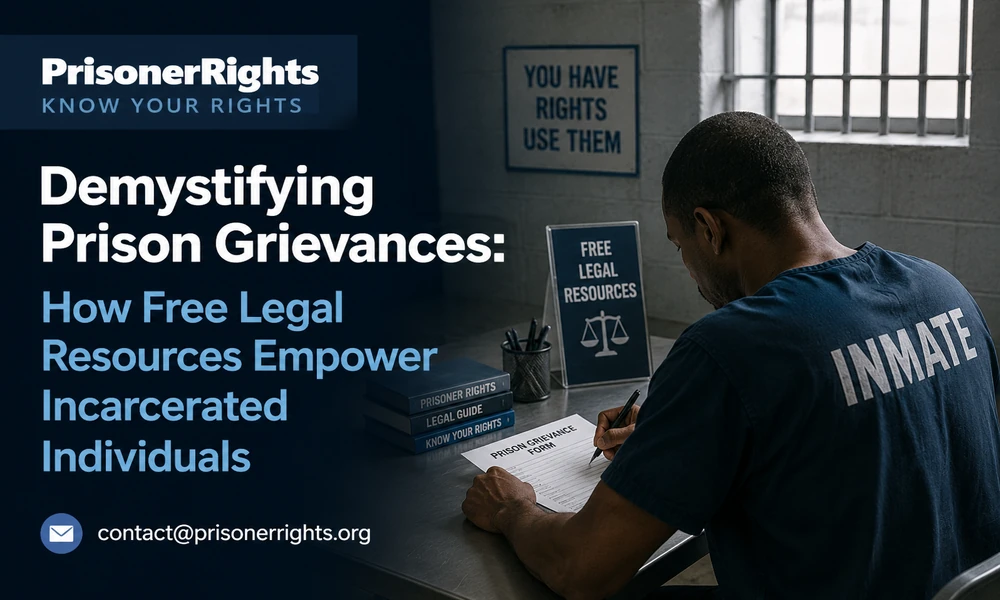
Demystifying Prison Grievances: How Free Legal Resources Empower Incarcerated Individuals
A grievance is not just a complaint in prison. Frequently, it is the first formal step an individual incarcerated take to resolve issues of medical care, safety, environmental conditions, or access to basic services. The grievance process, when done right, lays a formal paper trail in case it later becomes necessary to proceed with litigation. And knowing how the process works − and where to find credible information − can help hugely. Educational platforms like PrisonerRights.org aid in procedural, available resources, and key aspects for prisoner rights.
Why the Grievance Process Matters?
In fact, most lawsuits by inmates are barred until they have first gone through the internal grievance system in the corrections facility. Ignoring a mandatory step or deadline can preclude subsequent options.
If an inmate has requested medical treatment multiple times with no response, a procedural grievance creates an official timeline of events. That record might later corroborate conversations with an attorney or a Legal Aid organization.
PrisonerRights educates people about how these processes fit into the larger legal system.
Good Documentation Strengthens Every Case
Grievance is most powerful when there are facts rather than emotions involved. Information presented in clean and neat form help reviewers comprehend what happened without much fuzz of confusion.
Useful details include:
- Date and time of the incident
- Contact information for staff and/or witnesses, where possible
- Objective recount of events
- Any precedential copies of requests or responses
- The outcome being requested
So, even run of the mill notes in chronological order can be important if questions have to come into play later on.
Covering Critical Areas of Expertise Can Be Accomplished with Free Resources
A House of Commons committee has found that there are fewer prisons than before, which means that legal help for prisoners is more limited. Family members can also be unaware of prison policies while trying to assist a relative. This is where sources of education come in handy.
Websites like PrisonerRights.org can help readers:
- Better understand prisoner rights
- Find out how third-party grievance procedures usually operate in prison
- Resources for teaching correctional law
- Learn about legal aid
- Understand why proper documentation matters
Many errors that can prolong or complicate the grievance process are often avoided with immediate access to correct information.
Families are Huge Part of the Support
Sometimes a spouse, a parent, a sibling, or close friend can help by helping organize the paperwork, find public information, and keep track of deadlines. They cannot take every legal step for the incarcerated person to follow but they can help keep records organized.
Having all grievance forms, court documents, letters, and responses all together helps with documenting for future communications (with attorneys or Legal Aid providers).
Knowledge Creates Better Decisions
Understanding Prisoner Rights does not entail inciting frivolous lawsuits. It’s about showing inmates how to identify procedures that are open to them, comply with necessary steps, and safeguard their prisoner rights through proper filing and able decision making.
PrisonerRights.org provides a very useful initial reference for anyone looking to familiarize themselves with prison grievance procedures. These resources, along with orderly records and (when applicable) assistance from Legal Aid professionals, enable people to approach the process more self-assuredly, equipped for it better, and understanding what they must do.